Food2 min read
Convenience store food in Japan for vegetarians: what is safe, what is not
7-Eleven, FamilyMart and Lawson are on every corner. A short list of safe picks, the label words to look for, and why the allergen list won't catch fish stock.
By the Troose team ·
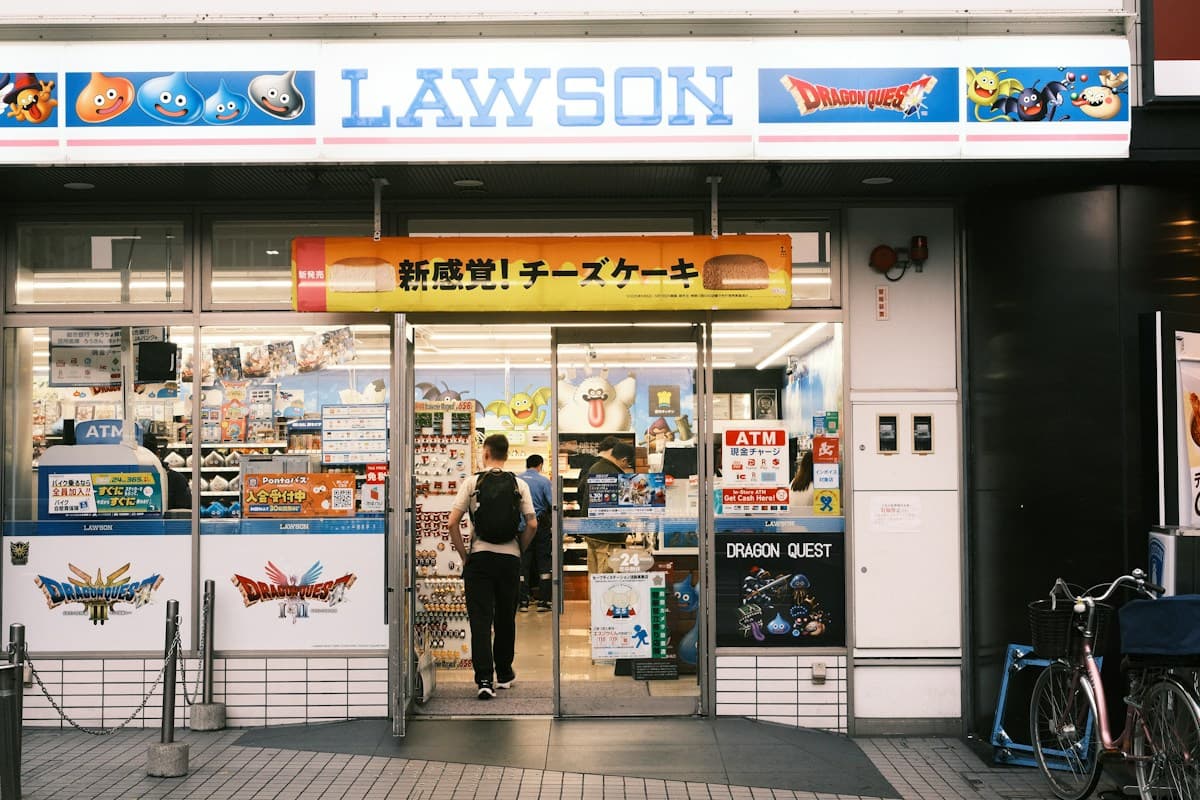

Konbini (7-Eleven, FamilyMart, Lawson) are the easiest breakfast and snack stop in Japan, but most ready meals contain meat, fish or fish stock. Stick to a short list of simple foods, read the ingredients for a few key words, and do not trust the allergen list to catch dashi.
Why konbini matter
Japanese convenience stores are open 24 hours, spotless, and everywhere: train stations, highway stops, the corner by your hotel. For a vegetarian they solve the two hard meals, breakfast and day-trip lunch, if you pick carefully.
Usually safe
Salt rice ball
Usually veg塩むすび shio musubi
Plain rice, salt, sometimes seaweed. The safest onigiri on the shelf.
Fresh fruit
Usually veg果物 kudamono
Bananas, cut fruit cups and apples, in most stores.
Plain soy milk
Usually veg無調整豆乳 muchousei tounyuu
Unsweetened soy milk. Flavoured ones are usually fine too.
Nuts and edamame
Usually vegナッツ・枝豆
Salted nuts and pre-cooked edamame.
Plain yoghurt
Ask firstヨーグルト yooguruto
Plain yoghurt is usually fine. Some flavoured ones contain gelatin.
Pickled plum rice ball
Ask first梅おにぎり ume onigiri
Often fine, but the okaka-ume version (おかか梅) mixes the plum with bonito flakes. Read the label.
Usually not safe
Oden
Not vegおでん oden
The simmering pot by the till. Every piece sits in fish stock.
Cup noodles
Not vegカップ麺 kappu-men
Almost all contain meat or fish extract in the soup.
Sandwiches
Has eggサンドイッチ sandoitchi
Most contain egg mayonnaise or ham. Even the vegetable ones.
Inari sushi
Not vegいなり寿司 inari-zushi
The sweet tofu skin is usually simmered in dashi.
Curry rice
Not vegカレーライス karee raisu
Japanese curry roux usually contains meat extract.
Sweet breads
Has egg菓子パン kashi-pan
Many contain egg. Some are fine. Check for 卵.
The words to look for on a label
The ingredients list is headed 原材料名 (genzairyou-mei). Scan it for these:
| Japanese | Reading | Means |
|---|---|---|
| 肉 / 豚 / 牛 / 鶏 | niku / buta / gyuu / tori | meat / pork / beef / chicken |
| 魚 / 魚介 | sakana / gyokai | fish / seafood |
| かつお / 鰹 / かつお節 | katsuo / katsuobushi | bonito / bonito flakes |
| 煮干し | niboshi | dried sardine |
| ポーク / チキン / ビーフ | pooku / chikin / biifu | pork / chicken / beef |
| ラード / 動物油脂 | raado / doubutsu yushi | lard / animal fat |
| 魚醤 / オイスターソース | gyoshou / oisutaa soosu | fish sauce / oyster sauce |
| だし | dashi | stock (usually fish) |
| エキス | ekisu | extract (often meat or fish) |
| 卵 | tamago | egg |
| ゼラチン | zerachin | gelatin |
| 乳 | nyuu | milk (but 乳化剤 is just an emulsifier) |
On a Troose trip
Breakfast is included at the hotel every day, and dinner is Indian every night. Konbini are most useful for snacks on the Kamakura and Kawaguchiko day trips, and your guide can read any label for you.
Quick questions
Does 7-Eleven Japan have vegetarian food?
Some. Plain salt rice balls, fruit, soy milk, nuts and edamame are safe bets. Most ready meals contain meat, fish or fish stock.
Are onigiri vegetarian?
Some are. Salt rice balls (shio musubi) are the safest. Many fillings contain fish, meat or dashi, so read the label.
Is oden vegetarian?
No. Everything in the oden pot is simmered in fish stock.
The Tokyo Waddle
Nine days in and around Tokyo, planned for Indian travellers
Fly from India, land in Tokyo and let us handle the transport, tickets and timings. Centuries-old temples by morning, radiant neon cities by night, Mt Fuji mirrored in a lake, and a whole day to shop before you fly home.
- Indian dinner every night
- A guide who speaks English, Hindi and Japanese
- 15 places in 9 days
From ₹1,95,000 per person